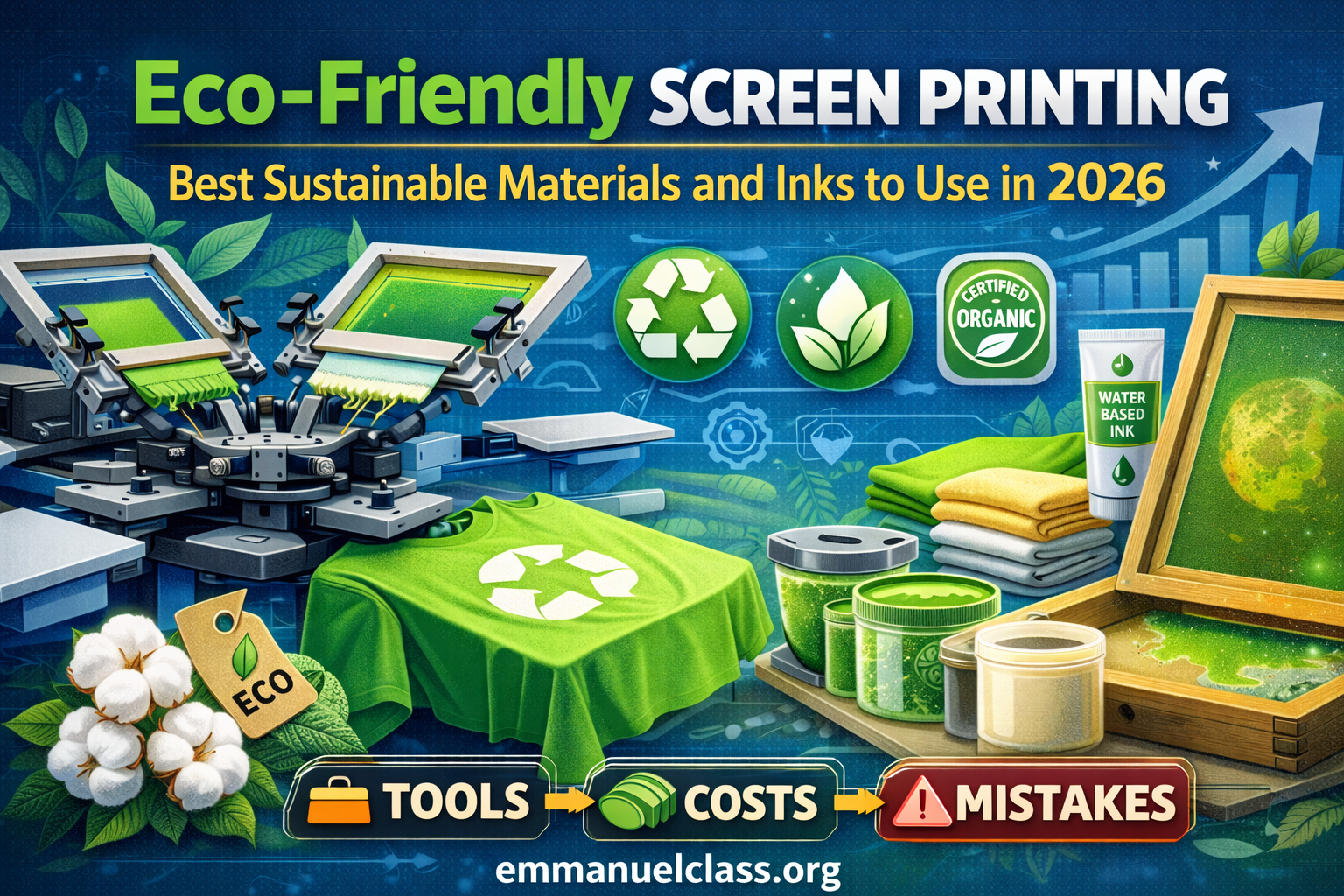
Sustainability is not a trend anymore, it is a need. Eco-friendly screen printing is becoming more popular in 2026 as brands, studios, and individual designers are focusing more on environmental responsibility. It not only means that it is more environmentally friendly with the use of sustainable materials and safe inks, but also targets clients interested in having ethical production and good quality products. Specializing in the environmentally-friendly screen printing will enable studios to create colorful long-lasting prints without causing much harm to the environment. The alternatives to printing that are more environmentally friendly, in terms of organic fabrics, water-based inks, and energy-saving equipment, have never been more available.
Ecological and natural fabrics
Eco-friendly screen printing begins with the fabric. Organic cotton, bamboo mixtures and recycled polyester are trending in 2026 as they are less toxic, less water and less energy consuming to make.An example of such organic cotton is that which is cultivated without using synthetic pesticides and this creates healthier soil and pollutes less. Bamboo material is renewable and grows very fast and recycled polyester minimizes wastes produced by plastic bottles and other materials.These fabrics are sustainable and also increase the quality of the print. Fibers take inks uniformly making the prints sharper and bright. The eco-friendly screen printing studios that use these fabrics tend to draw the clients who are aware of the environment and are ready to spend more money on ethical products.
Water Soluble and Non-Toxic Inks
Any screen printing system that is environmentally friendly requires water-based and non-toxic ink. In comparison to the traditional plastisol inks, which have PVC and other toxic chemicals, the water-based inks are more environmentally friendly and safe to the workers working with them.
⦁ The advantages of using these inks are:
⦁ Comfortable, breathable printed soft fabrics.
⦁ Bright and vivid colors, which will last in the long term.
⦁ Less negative environmental impact, through biodegradable ingredients.
The new developments in technology of water-based ink have enhanced coverage, opacities, and vibrancy of colors. It is also possible to print detailed designs and gradients as well as multi-color images at studios without losing quality. Using such inks, printers demonstrate the obvious interest in sustainability and at the same time provide professional outcomes.
Environmentally Friendly Printing Methods
Sustainability is not only a material concern, but also a workflow concern. Eco-friendly print screens are focused on efficient practices. Some of the feasible methods of reducing waste include the use of less water, less ink going to waste, and reusing of screens as much as possible.
Examples include pre-treating the garments only when they are required, as opposed to using too much of the chemicals. Use of recycled inks, correct storage of screens and accurate temperature regulation in curing all help to make the working process more environmentally friendly. These practices ensure that studios are cost-effective, environmentally friendly and at the same time, produce high-quality products.
Environmentally friendly Additives and Treatments
The additives employed in the printing procedure are significant in sustainability besides fabrics and inks. Green screen printing involves the use of non-toxic adhesives, softeners, and curing agents so as to make each process environmentally friendly.
Random bullets in order to be clear:
⦁ Bio-soft prints discharge agents.
⦁ Color fixatives of low impact to improve durability.
⦁ Instead of using harsh chemicals, plant-based solvents are used.
⦁ Compostable or recyclable packaging of finished prints.
Such sustainable solutions will not only minimise pollution but also meet the demands of clients to have ethical and responsible manufacturing.
Energy-Efficient Equipment
In 2026, modern studios that are environmentally friendly in their screen printing practices are also investing in equipment that is energy efficient. With the use of hi-tech low energy dryers, presses and LED lighting systems, the power usage will be minimized without compromising on the quality of production. Some of them are an automatic shut-off, and digital temperature controller, as well as LED curing lights. These inventions conserve financial resources on the utility bills and reduce the carbon footprint of the printing processes. The studio can also show commitment to sustainability by selecting energy-efficient equipment as another manner of attracting conscious clients.
Sustainability Marketing to Clients
Making the emphasis on environmentally friendly screen printing skills a powerful marketing instrument can be a good idea. Consumers are increasingly taking brands and studios that are concerned with sustainability. Studios can emphasize:
⦁ Apparel made of recycled or organic fabrics.
⦁ Safe and colorful prints using water-based and non-toxic inks.
⦁ Less waste and energy efficient processes.
These practices should be shared in marketing materials, social media posts or on websites in order to gain credibility and trust. Green printing policies also tend to entail the charge of a slightly higher price because customers do not mind spending money on ethically manufactured goods.
Trends in Eco-Friendly printing in the future
In the future, the eco-friendly screen printing in 2026 will still be innovative. Bio inks, zero waste processes, and plant based fabrics will become a norm.
Those studios that embrace sustainable practices today will be at an advantage to compete. Being updated on new materials, inks and techniques will help your business establish itself in order to meet the expectations of clients and mitigate the effect of environmental degradation. Sustainability does not only make sense in terms of planetic health, but it is also a savvy business model towards success over the long run.
Conclusion
The apparel industry will transform in 2026 through eco-friendly screen printing. Whether it is organic materials and water-based inks, more energy-efficient equipment and sustainable work processes, there are innumerable ways in which studios can minimize their environmental impact and still not compromise on quality.
Through sustainability, your company is able to produce high quality and vibrant prints that would appeal to these conscious consumers and encourages responsible production.
Begin your green screen printing business today- adopt sustainable fabrics, inks and processes to have a difference and expand your business in the year 2026.