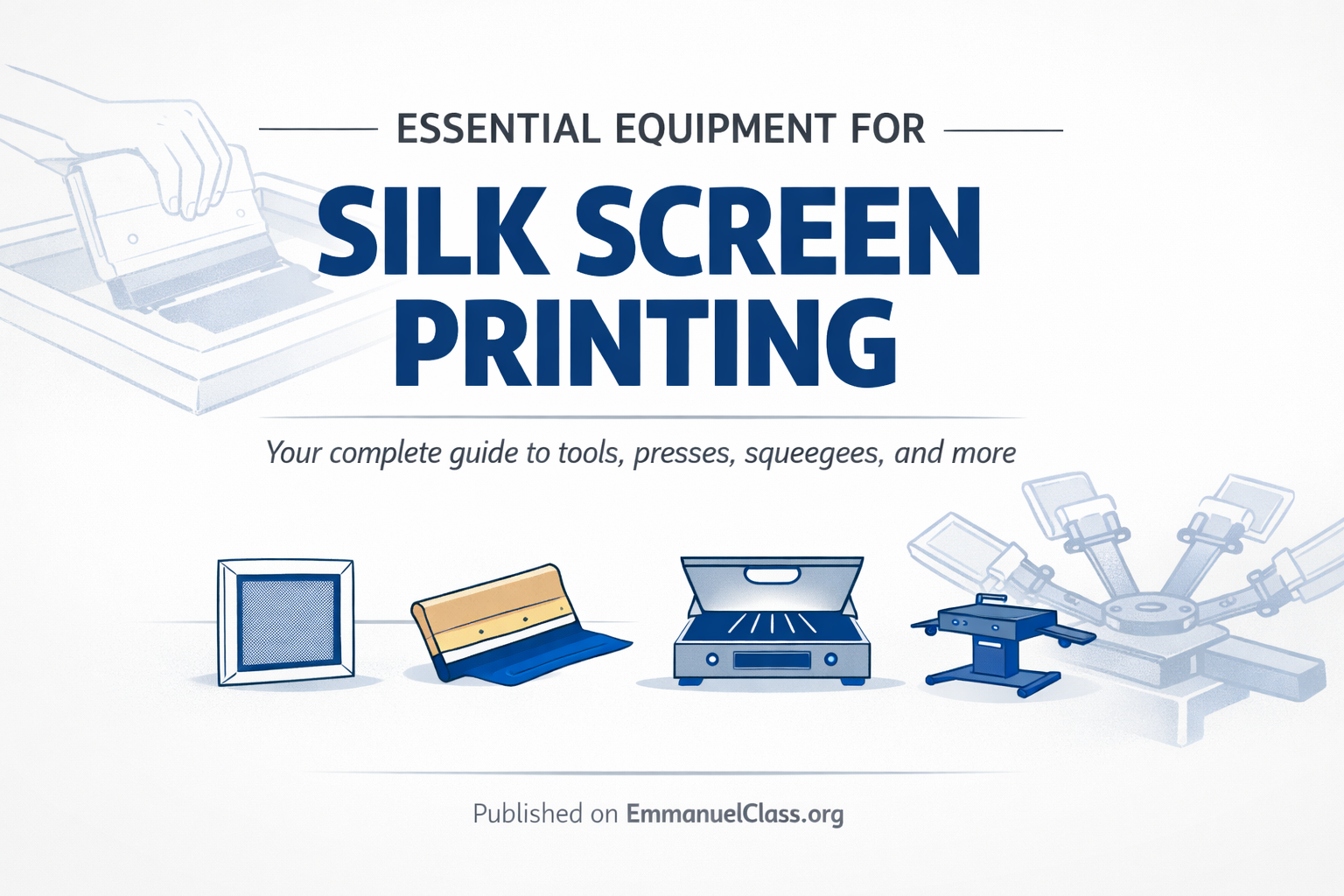
Silk screen printing (also known as screen printing) remains one of the most reliable and profitable printing methods in the apparel, packaging, and promotional products industries. I was first introduced to screen printing through a small T-shirt production setup, where we manually printed designs for local events and businesses. That hands-on experience quickly revealed an important truth: the quality of your output depends heavily on the equipment you use and how well you understand it.
This guide is written for beginners, small business owners, and intermediate printers who want a clear, trustworthy, and practical breakdown of silk screen printing equipment. Whether you are setting up a home studio or scaling to commercial production, this article will help you make informed decisions.
What Is Silk Screen Printing?
Silk screen printing is a printing technique that uses a mesh screen, stencil (emulsion), and ink to transfer a design onto a surface such as fabric, paper, plastic, metal, or glass.
The process involves:
- Creating a stencil on a mesh screen
- Applying ink to the screen
- Using pressure to force ink through open areas of the stencil onto the substrate
This method is valued for its durability, color vibrancy, and scalability, which is why it is widely used in T-shirt printing, signage, and industrial applications.
Core Equipment for Silk Screen Printing
1. Screen Frames and Mesh
Screen frames hold the mesh that carries the stencil. They are one of the most critical components of the entire process.
Common frame materials:
- Aluminum (most durable and professional)
- Wood (budget-friendly, less durable)
Mesh count refers to the number of threads per inch and determines ink flow:
- 110–160 mesh: Thick inks, bold designs, plastisol printing
- 200–230 mesh: Fine details, water-based inks
- 305+ mesh: Extremely detailed prints, halftones
Practical insight:
In my early setup, using the wrong mesh count caused blurred designs. Once I standardized mesh selection per job type, print quality improved immediately.
2. Emulsion and Sensitizer
Photo emulsion is a light-sensitive chemical applied to the screen to create the stencil.
Types of emulsion:
- Diazo (beginner-friendly, longer exposure time)
- Dual-cure (balanced, widely used)
- Pure photopolymer (fast exposure, professional use)
Why it matters:
Poor-quality or expired emulsion leads to stencil breakdown and wasted screens.
Credible references:
Manufacturers such as Speedball, Saati, and Ulano provide detailed emulsion guides on their official websites.
3. Exposure Unit (or Light Source)
The exposure unit hardens the emulsion where light passes through the design film.
Options include:
- Professional LED exposure units
- UV fluorescent exposure boxes
- DIY exposure setups (sunlight or UV bulbs)
Best practice:
For consistency and repeatability, an LED exposure unit is strongly recommended once you move beyond hobby-level printing.
4. Squeegees
A squeegee is used to push ink through the screen onto the substrate.
Key variables:
- Blade hardness (durometer)
- Soft (60): heavy ink deposit
- Medium (70): most versatile
- Hard (80): fine details
- Blade shape: straight, rounded, beveled
Experience-based tip:
Using a worn squeegee blade can ruin print consistency. Regular blade replacement is a simple but often overlooked quality control step.
5. Printing Press
The press holds screens and substrates in alignment.
Types of presses:
- Single-station manual press
- Multi-station manual carousel
- Automatic screen printing press
Who should use what:
- Beginners: Single-station manual
- Small businesses: 4–6 color manual press
- Commercial shops: Automatic press
6. Inks for Screen Printing
Common ink types:
- Plastisol ink (durable, industry standard)
- Water-based ink (soft hand feel, eco-friendly)
- Discharge ink (removes fabric dye, advanced use)
Health and safety note:
Always use proper ventilation and follow manufacturer safety data sheets (SDS).
Trusted sources:
Brands like Wilflex, Union Ink, and Permaset publish technical documentation and best practices.
7. Dryer or Curing Equipment
Ink must be cured to bond permanently with the substrate.
Curing options:
- Flash dryer
- Conveyor dryer
- Heat press (small runs)
Improper curing is one of the most common causes of customer complaints such as cracking or fading prints.
8. Washout Booth and Cleaning Tools
A washout booth is used to rinse exposed screens and clean ink residue.
Essential accessories:
- Pressure washer or hose
- Degreasers
- Screen reclaiming chemicals
Maintaining clean screens directly affects stencil life and print accuracy.
Comparison Table: Manual vs Automatic Screen Printing Setup
| Feature | Manual Setup | Automatic Setup |
|---|---|---|
| Initial Cost | Low–Medium | Very High |
| Production Speed | Low–Medium | High |
| Labor Required | High | Low |
| Skill Dependency | Moderate | High (technical) |
| Best For | Startups, small shops | Large-scale production |
Real-World Case Studies
Case Study 1: Local T-Shirt Startup
A small Nigerian apparel brand started with a single manual press, aluminum screens, and plastisol ink. By reinvesting profits into better exposure equipment, they doubled output quality within six months.
Case Study 2: Event Merchandise Printer
A print shop servicing schools and churches used incorrect curing temperatures, leading to customer returns. After investing in a conveyor dryer and ink thermometer, defect rates dropped significantly.
Case Study 3: Home-Based Designer Brand
An independent designer printing limited editions used water-based inks with high mesh screens to achieve premium soft-hand prints, successfully positioning the brand at a higher price point.
Conclusion: Building a Reliable Screen Printing Setup
Silk screen printing is not just about owning equipment—it is about understanding how each component works together. Investing wisely, maintaining your tools, and following industry best practices will lead to consistent results and long-term success.
Whether you are printing your first T-shirt or managing a growing print shop, the right equipment combined with real knowledge makes the difference between wasted materials and professional output.
Call to Action
If you found this guide helpful:
- Leave a comment with your setup or questions
- Subscribe to our newsletter for practical printing guides and business insights
- Share this article with someone starting in screen printing
Your engagement helps us publish more high-quality, experience-based content.